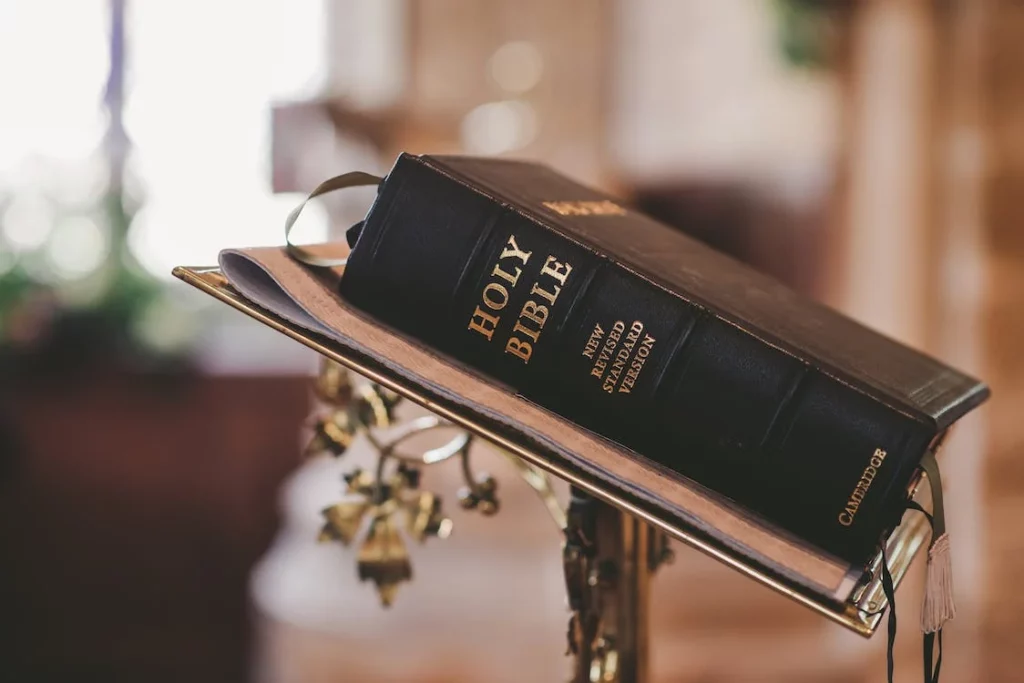
There are many different names for God used by Holy Spirit in the Bible. Yahweh, Adonai, Elohim, and I AM are just a few. Jesus came to reveal God’s name as Father or Abba. A complete study of the names of God would be very lengthy. This article aims to discuss the “Seven Redemptive Names of God.” These names of God reveal what God accomplished in Christ Jesus the Lord as our Redeemer.
Isaiah 52:6 AMPC
Therefore My people shall know what My name is and what it means; therefore they shall know in that day that I am He who speaks; behold, I Am!
Isaiah prophesies that we will know God’s name and know what it means. Knowing a redemptive name of God and what it means to us personally allows us to appreciate and appropriate that specific work of redemption in our lives. Not only can we pray for and believe for these redemptive truths to be effective in our lives, but also the lives of those we love and for whom we intercede in prayer. In Psalms, we see that those who know His name will trust Him:
Psalms 9:10 NASB
And those who know Your name will put their trust in You, For You, O Lord, have not forsaken those who seek You.
And in Proverbs we see that His name is a strong tower of safety:
Proverbs 18:10 NASB
The name of the Lord is a strong tower; The righteous runs into it and is safe.
Each of the seven redemptive names of God begins with “Jehovah” or “Yahweh.” Jehovah means “the existing One” and can be thought of as the proper name of God. It is also translated in the Old Testament as “LORD.”
Jehovah Tsidkenu
The prophet Jeremiah records the true heart of God about our righteousness in His sight. Through Jeremiah, He tells us that He is our Righteousness. The following words are restated and clarified thoroughly in the New Testament.
Jeremiah 23:5, 6 AMPC
5 Behold, the days are coming, says the Lord, when I will raise up to David a righteous Branch (Sprout), and He will reign as King and do wisely and will execute justice and righteousness in the land. 6 In His days Judah shall be saved and Israel shall dwell safely: and this is His name by which He shall be called: The Lord Our Righteousness.
Jeremiah 33:16 AMPC
In those days Judah shall be saved and Jerusalem shall dwell safely. And this is the name by which it will be called, The Lord is Our Righteousness (our Rightness, our Justice).
In the Hebrew language, the word tsidkenu (or tsedeq) means righteousness or rightness. God has no respect for human self-righteousness or piety. In fact, He goes so far as to speak through the prophet Isaiah that our own righteousness is as “filthy rags” and “a polluted garment” (Isaiah 64:6). A perfect description of God’s heart toward our righteousness was written by the Apostle Paul to the church at Philippi.
Philippians 3:9 (AMPC)
And that I may [actually] be found and known as in Him, not having any [self-achieved] righteousness that can be called my own, based on my obedience to the Law’s demands (ritualistic uprightness and supposed right standing with God thus acquired), but possessing that [genuine righteousness] which comes through faith in Christ (the Anointed One), the [truly] right standing with God, which comes from God by [saving] faith.
These words follow a description of Paul’s life of dedication to fulfilling all the Old Covenant Law (see vv. 4-8). After his conversion to Christianity, Holy Spirit taught him that righteousness was a gift from Jesus to be received gratefully, not command from God to be achieved by works. Authentic righteousness is given to a believer as a grace gift.
Paul tells the Romans that Abraham believed God, and it was counted to him as righteousness.
Genesis 15:6 AMPC
And he [Abram] believed in (trusted in, relied on, remained steadfast to) the Lord, and He counted it to him as righteousness (right standing with God).
Romans 4:3 AMPC
For what does the Scripture say? Abraham believed in (trusted in) God, and it was credited to his account as righteousness (right living and right standing with God).
Other scriptures that support God’s free gift of righteousness are 2 Corinthians 5:17-21, Galatians 2:8-9, Romans 4:5-6, 13, 16; 5:1, 17, and many, many more.
Jesus Christ lived on this earth in perfect obedience to God and Jesus earned righteousness. Jesus was perfectly holy and righteous at his birth, during His earthly life, at His death, at His resurrection and now seated at the right hand of God. God the Father honors and respects His Son’s righteousness. He gives His righteousness as a free gift to any who would believe in Him.
Jehovah Rapha
Shortly after the Israelites passed through the Red Sea and God destroyed Pharoah’s army in the sea, God revealed Himself as Jehovah Rapha, the Lord our Healer.
Exodus 15:25, 26 AMPC
25 And he cried to the Lord, and the Lord showed him a tree which he cast into the waters, and the waters were made sweet. There [the Lord] made for them a statute and an ordinance, and there He proved them, 26 Saying, If you will diligently hearken to the voice of the Lord your God and will do what is right in His sight, and will listen to and obey His commandments and keep all His statutes, I will put none of the diseases upon you which I brought upon the Egyptians, for I am the Lord Who heals you.
The Hebrew Jehovah Rapha is translated “the Lord Who heals you.” Rapha means to “heal” or “make healthful.” Other definitions are “healer” and “physician.”
God calls Himself Jehovah Rapha. He calls Himself our Physician. In addition to being our Physician, His Word is our medicine.
Psalm 107:20 AMPC
He sends forth His word and heals them and rescues them from the pit and destruction.
Proverbs 4: 20-22 AMPC
22 My son, attend to my words; consent and submit to my sayings. 21 Let them not depart from your sight; keep them in the center of your heart. 22 For they are life to those who find them, healing and health to all their flesh.
Jesus spent a great deal of time healing the sick. Besides preaching and teaching, Jesus’ main occupation was healing the sick. Read any of the four Gospels to verify that for yourself. People were always coming to “hear and be healed” (Luke 5:15). Healing the sick was clearly a priority for Jesus in His earthly ministry.
According to Isaiah, both salvation from sin and healing were accomplished in Jesus’ suffering and death.
Isaiah 53:4-6 AMPC
4 Surely He has borne our griefs (sicknesses, weaknesses, and distresses) and carried our sorrows and pains [of punishment], yet we [ignorantly] considered Him stricken, smitten, and afflicted by God [as if with leprosy]. 5 But He was wounded for our transgressions, He was bruised for our guilt and iniquities; the chastisement [needful to obtain] peace and well-being for us was upon Him, and with the stripes [that wounded] Him we are healed and made whole. 6 All we like sheep have gone astray, we have turned every one to his own way; and the Lord has made to light upon Him the guilt and iniquity of us all.
“By the stripes [that wounded] Him we are healed and made whole.” When Jesus stood in judgment before Pontus Pilate He was sentenced to die by crucifixion. He was also sentenced to be beaten with thirty-nine lashes before He was put to death. Why send Him to the whipping post? It was to fulfill Isaiah’s prophecy – those stripes were for our healing. The book of Psalms records another prophecy of the whipping post.
Psalm 129:3 (AMPC)
The plowers plowed upon my back; they made long their furrows.
With each lash, Jesus Christ, God in flesh, was providing for our healing (2 Peter 2:24).
Jehovah Jireh
God calls Himself Jehovah Jireh, the Lord our Provider, when He sends Abraham to the land of Moriah to sacrifice his son Isaac.
Genesis 22: 12-14 AMPC
And He said, Do not lay your hand on the lad or do anything to him; for now I know that you fear and revere God, since you have not held back from Me or begrudged giving Me your son, your only son. 13 Then Abraham looked up and glanced around, and behold, behind him was a ram caught in a thicket by his horns. And Abraham went and took the ram and offered it up for a burnt offering and an ascending sacrifice instead of his son! 14 So Abraham called the name of that place The Lord Will Provide. And it is said to this day, On the mount of the Lord it will be provided.
In the King James Bible, verse 14 says:
And Abraham called the name of that place Jehovahjireh: as it is said to this day, In the mount of the Lord it shall be seen.
If you read Genesis 22 from the beginning, it is almost hard to believe. God literally tells Abraham to sacrifice his son! God hated human sacrifice and judged pagan nations who worshipped their false gods with human sacrifice. God knew, however, that He was going to intervene and stop the killing of Isaac by providing the ram. He asked Abraham, His covenant man, to sacrifice his son so that thousands of years later Father God could sacrifice His Son. And Jesus, the Lamb of God, died as the sacrifice for sin.
One of the most consistently recurring themes in both the Old Testament and the New Testament is God’s willingness to supply our needs. As a Father, God’s heart is to see to it that all His beloved children are well-supplied. He created this planet to be filled with people who experience no lack of any good thing. Sin, in the form of greed, covetousness, poor stewardship and theft (to name just a few), has deprived most of the human race of the necessary requirements for living. Many precious people and ministries work and give tirelessly to alleviate suffering from lack and need. God calls Himself Jehovah Jireh because He wants to supply our needs.
Philippians 4:19 AMPC
And my God will liberally supply (fill to the full) your every need according to His riches in glory in Christ Jesus.
Notice the scripture says, “God will supply your needs according to His riches in glory in Christ Jesus”! That means that God is not limited to our worldly supply. God is not limited by what we can come up with here on earth. God will supply according to His riches!! God will supply his beloved children supernaturally! He will go beyond the natural and do superabundantly above what seems possible. God is never limited by our circumstances, geography, situation, nationality, income, education, employment or lack thereof. He provides for us out of His abundance.
II Corinthians 9: 8-11 NASB
8 And God is able to make all grace abound to you, so that always having all sufficiency in everything, you may have an abundance for every good deed; 9 as it is written, “He scattered abroad, he gave to the poor, His righteousness endures forever.” 10 Now He who supplies seed to the sower and bread for food will supply and multiply your seed for sowing and increase the harvest of your righteousness; 11 you will be enriched in everything for all liberality, which through us is producing thanksgiving to God.
One of the provisions of God’s grace is sufficiency. God desires to provide for us and to provide through us. God calls Himself “the Provider” and we look to Him to provide for our needs.
Jehovah – Nissi
In the book of Exodus, chapter 17 there is a report of a battle between Israel and Amalek. During the battle, Moses stood on a hill observing the warfare. When Moses held his hand up, Israel prevailed. But when Moses’ hand fell, Amalek prevailed. After a period of time, Moses became weary so Aaron and Hur sat him on a stone and held his hands up for him. Joshua, the battle captain, and Israel were victorious that day.
Exodus 17:13-15 NASB
13 So Joshua overwhelmed Amalek and his people with the edge of the sword. 14 Then the Lord said to Moses, “Write this in a book as a memorial and recite it to Joshua, that I will utterly blot out the memory of Amalek from under heaven.” 15 Moses built an altar and named it The Lord is My Banner;
Nissi, translated banner or standard, was a rallying point. It was a place of gathering in a common name or for a common purpose. In the book of Numbers, we see the Lord telling Moses and Aaron to announce to the families of Israel that they were to gather under the banner of their father’s household.
Numbers 2:1-2 NASB
1 Now the Lord spoke to Moses and to Aaron, saying, 2 “The sons of Israel shall camp, each by his own standard, with the banners of their fathers’ households; they shall camp around the tent of meeting at a distance
In this instance, the people of a family or tribe gathered under their family banner. It was a place of identification. By gathering with their kinsmen, each Israelite was saying “this is my tribe.”
Banners or standards were also used in battle by armies for identification. A banner was carried before an army as they went into battle. In the context of Exodus 17 and Moses declaring that “the Lord is My Banner,” God had just miraculously delivered Israel from their enemies and granted them a great victory! In a sense, Moses is saying “we gathered under the Lord’s name, and He gave us the victory.”
In the Song of Solomon, the writer states of the Lord:
Song of Solomon 2:4 AMPC
He brought me to the banqueting house, and his banner over me was love [for love waved as a protecting and comforting banner over my head when I was near him].
As believers in the Lord Jesus Christ, we gather under a banner He sets up for us. It is a banner of love. The Amplified Classic Version of the Bible expands “love” to include protection and comfort. When we draw near to Him, we gather with other Christians who are called by His name and identify with Him. We identify with His love and with His victory. King David also proclaims that our God raises a banner for His beloved people to gather about for protection and victory.
Psalm 60:4-5 NLT
4 But you have raised a banner for those who fear you— a rallying point in the face of attack. 5 Now rescue your beloved people. Answer and save us by your power.
Christians must know their true identity in Christ. Learning to believe God as Jehovah Nissi, and to gather near Him with other Christians under a banner He sets up, will help with that journey.
Jehovah Ra’ah
Probably the most well-known redemptive name of God is the Lord is my Shepherd or Jehovah – Ra’ah.
Psalm 23:1 AMPC
The Lord is my Shepherd [to feed, guide, and shield me], I shall not lack.
King David, the Psalmist, knew the work and responsibilities of a shepherd. He had been a shepherd during his youth. By his own account in 1 Samuel 17, he had been a good shepherd. When bears and lions attacked his sheep, David went after these predators, literally fought with them, and rescued the sheep right out of their mouths (1 Samuel 17:34-37). There is Another Who claimed to be a Good Shepherd – that is the Lord Jesus Christ.
John 10:11-15 NASB
11 “I am the good shepherd; the good shepherd lays down His life for the sheep. 12 He who is a hired hand, and not a shepherd, who is not the owner of the sheep, sees the wolf coming, and leaves the sheep and flees; and the wolf snatches them and scatters the flock. 13 He flees because he is a hired hand and does not care about the sheep. 14 I am the good shepherd, and I know My own, and My own know Me, 15 just as the Father knows Me and I know the Father; and I lay down My life for the sheep.
Jesus truly is our Good Shepherd. Not only will He do battle for us against predators, He laid down His life in death for us. There is no better Shepherd, Keeper, or Guardian than Jesus.
In Genesis 48:15 Jacob blesses Joseph’s sons and states that God had been his Shepherd every day of his life right unto the very day he was speaking. The prophet Isaiah says:
Isaiah 40:11 AMPC
He will feed His flock like a shepherd: He will gather the lambs in His arm, He will carry them in His bosom and will gently lead those that have their young.
This scripture verse paints such a beautiful picture. There are many times in our lives when we really need our Good God to gather us in His arms, close to His heart, and just carry us. Mothers and fathers with young children can be assured that God gently lead them and He is well aware of the path and pace of those rearing children.
Jehovah-Shalom
We find the redemptive name of God, Jehovah Shalom or the Lord is Peace, in the book of Judges. God called a man named Gideon to lead the Israelites during a time of trouble with the nation of Midian. The Midianites were raiding Israel and stealing their harvests. Judges 6:4 says of these Midianites, “They would encamp against them and destroy the crops as far as Gaza and leave no nourishment for Israel, and no ox or sheep or donkey.” Gideon was called to save Israel, but he had to be convinced that God was really calling him. After an encounter with the Angel of the Lord, Gideon feared for his life, but was assured that he would not die. Judges 6:24 describes Gideon’s response.
Judges 6:24 AMPC
Then Gideon built an altar there to the Lord and called it, The Lord is Peace. To this day it still stands in Ophrah, which belongs to the Abiezrites.
The Hebrew word for peace is shalom and actually means “completeness, soundness, welfare and peace.”
Gideon then went on to lead Israel to victory over Midian.
Isaiah prophesies that Jesus will be called the Prince of Peace.
Isaiah 9:6 AMPC
For to us a Child is born, to us a Son is given; and the government shall be upon His shoulder, and His name shall be called Wonderful Counselor, Mighty God, Everlasting Father [of Eternity], Prince of Peace.
Jesus Christ came to end the war between humanity and its Creator. He came to bring peace on earth and God’s good will towards mankind (Luke 2:14). Sin and disobedience set our race on a path of death and destruction, torment and fear. Jesus came to make peace, give peace, teach peace.
John 14:27 AMPC
Peace I leave with you; My [own] peace I now give and bequeath to you. Not as the world gives do I give to you. Do not let your hearts be troubled, neither let them be afraid. [Stop allowing yourselves to be agitated and disturbed; and do not permit yourselves to be fearful and intimidated and cowardly and unsettled.]
Jesus spoke these words to His disciples at the last supper, a very short time before His crucifixion. The word “bequeath” reminds us of a last will and testimony. In a will, a person will bequeath something to someone upon their death. Jesus was telling His disciples, “The peace that I have lived in here on the earth and among you, I am leaving to you.” It is not a worldly peace based on circumstances, earthly success, or human achievement. IT’S HIS OWN PEACE! It is a God-breathed, supernatural peace. What a wonderful inheritance! It is received and experienced by faith. He gave you and I His very own peace. We take it and walk in it. He goes on to say, “don’t let your hearts be troubled.” This is the second time in John 14 He told us not to let our hearts be troubled (see John 14:1). If it were not possible, He would not have given this command. We can prevent our hearts from being troubled. We call upon Jehovah Shalom and surrender our fears to Him. Living a life where God is Jehovah Shalom and Jesus has left us His peace can only be accomplished only be faith.
Jehovah Shammah
The God of the Bible, the Father of our Lord Jesus Christ, is omnipresent, omniscient, and omnipotent. He is all-present, all-knowing, and all-powerful. The prophet Ezekiel calls God Jehovah Shammah or “the Lord who is there.” After describing the lands and boundaries for the twelve tribes of Israel, Ezekiel describes a city and says:
Ezekiel 48:35 AMPC
The distance around the city shall be 18,000 [4 x 4,500] measures; and the name of the city from that day and ever after shall be, the lord is there.
Ezekiel 48:35 TLB
“The entire circumference of the city is six miles. And the name of the city will be ‘The City of God.’”
The Living Bible gives the phrase “the City of God” for “the Lord is There.”
God, Who is beyond time and space, is able to be with each and every one of us at all times, in all the places we go. One of the most beautiful and comforting passages of scripture is found in Psalm 139:7-10.
Psalms 139:7-10 AMPC
7 Where could I go from Your Spirit? Or where could I flee from Your presence? 8 If I ascend up into heaven, You are there; if I make my bed in Sheol (the place of the dead), behold, You are there. 9 If I take the wings of the morning or dwell in the uttermost parts of the sea, 10 Even there shall Your hand lead me, and Your right hand shall hold me.
Scripture declares “…if I make my bed in hell, behold Thou art there” (KJV). There is not a place that any believer in Jesus can go or be that He is not there with them. Jesus promises that He will never leave us or forsake us.
In tough times, trials, temptation, heartache, and confusion it can seem like God is far away. I may seem like He has forgotten us or maybe just gotten busy with other “God stuff” is not aware of us or our troubles. But that is simply not the truth. The writer of the book of Hebrews says:
Hebrews 13:5b NKJV
For He Himself has said, “I will never leave you nor forsake you.”
Holy Spirit, Who has inspired every word of scripture, plainly says that Father God, the Lord Jesus Christ, and He Himself are not going anywhere. When we invite Them into our lives, they come to stay. They do not bail on us when things get difficult. They are not ever going to leave us without help (see Hebrews 13:5b in the AMPC).
Jesus gave His disciples a great deal of necessary information at the Last Supper. He told them He was going away. He told them it was better for them that He go away. He told them that He would ask the Father to send Holy Spirit to us. Here are His words:
John 14:16-17 NASB
16 I will ask the Father, and He will give you another Helper, that He may be with you forever; 17 that is the Spirit of truth, whom the world cannot receive, because it does not see Him or know Him, but you know Him because He abides with you and will be in you.
Holy Spirit comes to be with us forever. While we might make a promise and later break it, it is impossible for Jesus to break a promise. It is not just that He won’t break a promise, it is impossible for Him to break a promise (see Hebrews 6:18).
More wonderful promises of God’s watchfulness and care for us are found in 2 Chronicles and Isaiah 30:
2 Chronicles 16:9a AMPC
For the eyes of the Lord run to and fro throughout the whole earth to show Himself strong in behalf of those whose hearts are blameless toward Him
Isaiah 30:18 AMPC
And therefore the Lord [earnestly] waits [expecting, looking, and longing] to be gracious to you; and therefore He lifts Himself up, that He may have mercy on you and show loving-kindness to you. For the Lord is a God of justice. Blessed (happy, fortunate, to be envied) are all those who [earnestly] wait for Him, who expect and look and long for Him [for His victory, His favor, His love, His peace, His joy, and His matchless, unbroken companionship]!
Combining these passages gives us a picture of God, watching over us for any opportunity to bless us and do good to us. Not only is He Jehovah Shammah, the Lord Who is There, He is there to help us at all times in all places and in a circumstances.
God calls Himself seven different names that describe our redemption in Christ Jesus. Learn these names. Study the scriptures. Find more scriptures that verify each of these redemptive names. Pray and declare these names and scriptures over yourself and your loved ones. These eternal truths are for you. Accept them. Grow in them. Be blessed by them.